


Across the country, schools are trying to solve a problem that teachers, parents, and students have felt for years: phones are everywhere, and they are hard to compete with.
The movement to restrict student phone use during the school day has moved quickly. Since Florida passed a statewide classroom phone restriction in 2023, bans and limits have spread across much of the United States. As of early 2026, 35 states and Washington, D.C., have signed or enacted laws or policies restricting student cell phone use, some prohibiting phones only during instruction, others banning them bell to bell.
Internationally, the same conversation is unfolding. UNESCO has argued that smartphones should only be used in school when they clearly support learning, and reported that by the end of 2024, 79 education systems, about 40 percent of those tracked, had laws or policies banning smartphone use in schools. Sweden, whose government has spent the past several years pulling back on screens and investing in textbooks and physical learning materials, is set to implement a national school phone ban beginning in fall 2026.
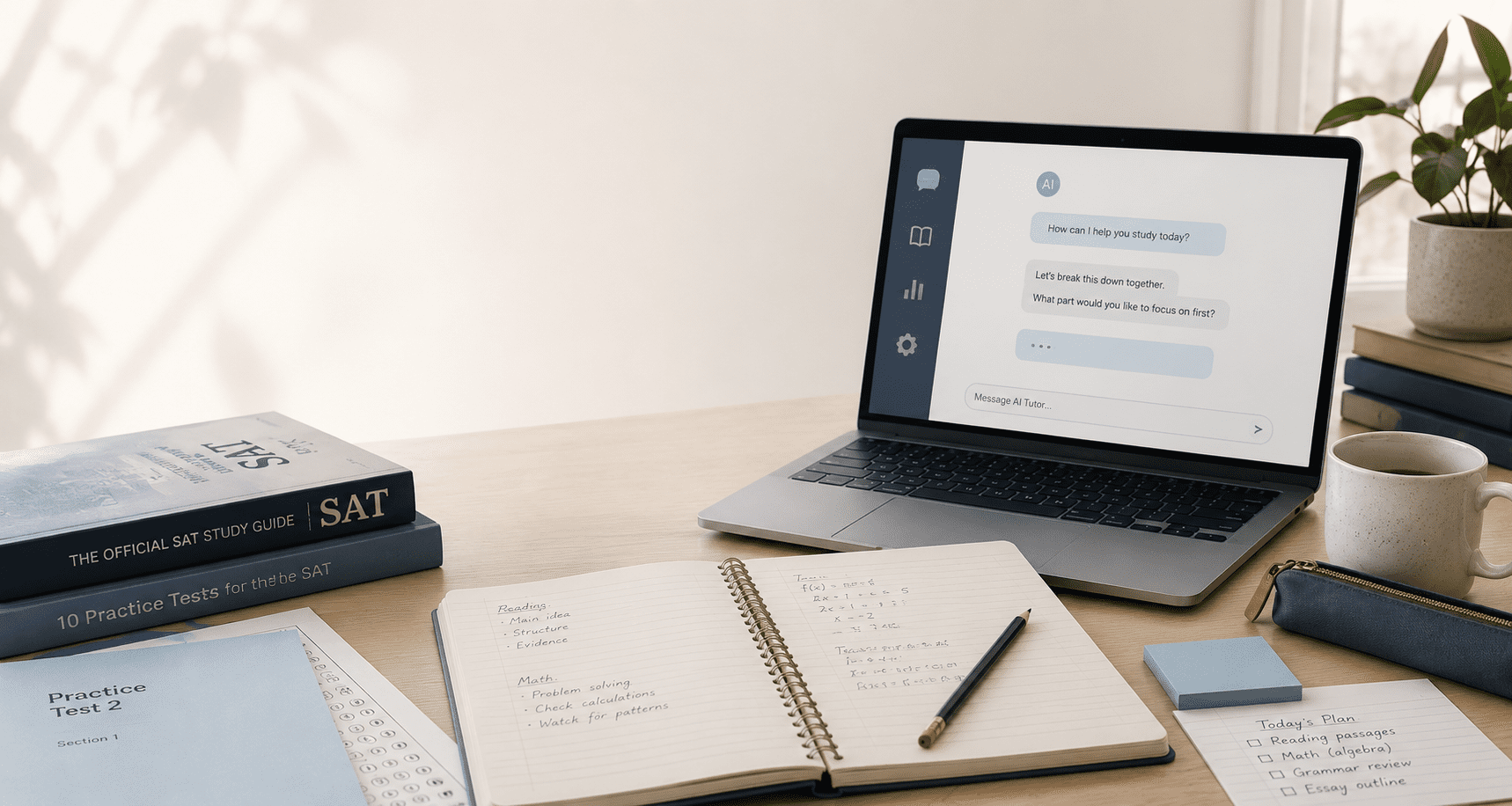
It does not seem that long ago that the biggest technology fight in schools was over phones. Now, just as many districts are moving to restrict phone use, a more pervasive technology is moving into classrooms, school board meetings, homework policies, and parent conversations: artificial intelligence. The debate is no longer simply about whether students are looking at screens. Education boards are shifting the discussion to distinguishing between distracting technology and educational technology, and that line is becoming harder to draw.
For many schools, phone bans are the most visible part of a broader rethink about classroom technology. Los Angeles Unified, a district that spent years encouraging 1:1 device use, approved a policy in 2026 to minimize screen time for district-issued devices, setting daily limits by grade level and banning devices outright for the youngest students.
That shift reflects a growing concern: schools may have solved one problem, access to devices, only to create another. A decade ago, the push was to close the digital divide by getting laptops and tablets into students’ hands. During the pandemic, screens became even more central to instruction. Now, some parents and educators are asking whether the classroom has become too dependent on devices, even when those devices are school-issued.
The concern is not that all technology is harmful. For some students, technology is essential. Students with dyslexia, ADHD, visual impairments, physical disabilities, or other learning needs may rely on assistive tools — speech-to-text, audiobooks, scheduling apps, specialized software — to access the curriculum at all. A blanket anti-screen policy can unintentionally make school harder for precisely the students who need it to be easier. NPR has highlighted this tension, noting that some students with disabilities depend on tools that broad screen restrictions may not fully account for.
The real question, then, is not “Should schools use technology?” It is “Which technology, for what purpose, at what age, and under whose control?”
Generative AI has arrived in schools before many districts have had time to decide what they believe about it. Some teachers use it to draft lesson materials, generate practice questions, adjust reading levels, or brainstorm examples. Some students use it as a study aid. Others use it to avoid doing the thinking that assignments are supposed to develop.
That is the central tension. AI can support learning when it helps students practice, get feedback, or understand a concept from another angle. But it can also short-circuit learning if it turns writing, problem-solving, or reading into tasks students simply outsource.
The U.S. Department of Education’s 2023 report on AI in teaching and learning emphasized a “human in the loop” approach, warning that AI should support educators rather than replace teacher judgment. More recently, the American Federation of Teachers called for limits on screens and AI while emphasizing hands-on learning, critical thinking, and human connection.
The tension is already playing out in real time. In March 2026, New York City proposed what would have been the country’s first AI-focused public high school. Next Generation Technology High School, a selective school in lower Manhattan built around Google’s AI platform and promising students access to industry mentors, technology certifications, and a curriculum designed to track the field as it moves. The backlash was swift. Parents packed a seven-hour school board meeting to demand a full moratorium on AI in NYC classrooms.
Twenty-nine City Council members wrote to the mayor asking him to pause generative AI in schools entirely. By late April, the chancellor had quietly withdrawn the proposal. The objections were layered: critics questioned the school’s rushed timeline, worried about private companies shaping public school curriculum, and raised equity concerns about a screened school in a wealthy neighborhood. It was a preview of the arguments that are now arriving in districts everywhere.
Parents and community members are clearly worried about what this takeover speed could mean. AI may not distract students in the same way TikTok or Snapchat does, but they can still change how students think, write, study, and persist through difficulty.
A student who uses AI to quiz herself on biology terms may be learning effectively. A student who asks AI to write an essay and then lightly edits the result may be skipping the part of the assignment that builds skill. The same tool can be productive or counterproductive depending entirely on how it is used.
The next wave of school technology policy will need to be more precise than “screens are bad” or “AI is the future.”
A useful framework separates technology into three distinct roles. There is distraction technology — phones, social media, messaging apps, games, entertainment platforms — which competes directly with attention during the school day. These are the clearest targets for restriction. There is access technology: assistive tools, translation software, audiobooks, speech-to-text, calendars, and organizational supports that help students participate in school.
These need protection, not blanket removal. And there is instructional technology — laptops, tablets, learning platforms, calculators, research databases, AI tools — which requires genuine judgment. These should be used when they make learning better, not simply because they are available.
That last category is where most of the debate will be. A laptop can be a notebook, a textbook, a calculator, a distraction machine, or a portal to an AI chatbot. The device itself does not tell us whether learning is happening.
The accessibility question is one of the most complicated parts of the AI-in-schools debate.
On one hand, AI has real promise for students who need more support. It can summarize dense readings, generate practice questions, adjust the reading level of a passage, translate instructions, support speech-to-text tools, help students organize ideas, or provide step-by-step explanations outside of class. For students with ADHD, dyslexia, visual impairments, language barriers, or executive-function challenges, those tools can make schoolwork meaningfully more manageable. CAST, the nonprofit that developed the Universal Design for Learning framework, has argued that AI can make learning more accessible and personalized — when it is designed with accessibility as a foundation rather than added later as an afterthought.
But that promise comes with real risks. If AI tools are unevenly available, students in better-funded schools may receive more advanced support while others are left behind. If tools are not designed for screen readers, assistive technology, multilingual learners, or neurodivergent students, they may create new barriers instead of removing old ones. Researchers and accessibility advocates have also flagged concerns about privacy, disability disclosure, biased outputs, and the risk of relying on AI systems that were not built or tested with disabled users in mind.
There is also a policy problem. Students with IEPs, 504 plans, or documented learning needs may be permitted to use certain assistive technologies, while classmates are told that similar AI-supported tools constitute cheating. That distinction may be legally and educationally necessary, but it is confusing in practice. Teachers need clear guidelines so that “AI use” is not treated as academic dishonesty in one classroom, an accommodation in another, and an ordinary study tool in a third.
This is where school policies need to be especially careful. A broad ban on AI may unintentionally remove tools that help some students access the curriculum. An anything-goes approach creates privacy, equity, and academic-integrity problems. The better question is not simply whether AI should be allowed — but who is using it, for what purpose, with what safeguards, and whether it is helping the student do the learning or replacing the learning altogether.
For families, the practical question is not whether a school has a phone ban. It is whether the school has a coherent technology policy.
A strong policy explains when devices are allowed, when they are not, how exceptions work for students with documented needs, and how teachers will handle AI use in assignments. It makes expectations explicit to students. Vague rules, “use AI responsibly” or “don’t misuse technology”, are unlikely to hold. Students need actual guidance: Can they use AI to brainstorm? To outline? To check grammar? To solve math problems? To summarize readings? To study for tests? The answers may vary by class, but they should not be a mystery.
For parents, this is also a good moment to separate two conversations that often get blurred together. One is about attention: how students focus, manage time, and stay present in class. The other is about academic integrity and skill-building: how students learn to write, reason, calculate, and think independently in a world where AI can do much of that for them. Phone bans may help with the first problem. They do not automatically solve the second. And the second, in the long run, is the more consequential one.
Share this: